Selling Retail as a Dog Trainer: The Gear Is Part of the Plan
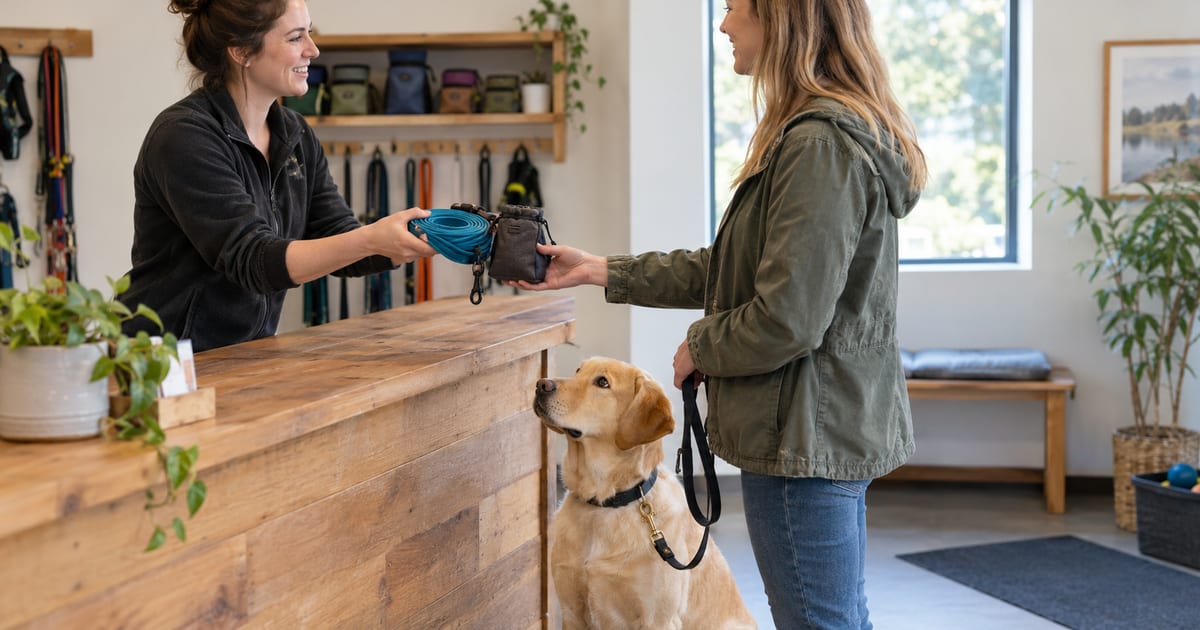
Tuesday afternoon, a private session in a park with a fourteen month old lab who thinks recall is a suggestion. You spend the hour on a fifteen foot long line, and by the end he is turning on his name more often than not. The owner asks where she can get a line like yours. You tell her: biothane, fifteen feet, a proper clip, not the cheap nylon one that burns your hands.
The following Tuesday she arrives with a twenty-six foot retractable lead. The pet superstore did not have what you described, the person in the aisle said this one was basically the same, and it was on sale. Half the session goes on undoing a week of the dog learning that pulling makes the leash longer.
You did nothing wrong. You gave good advice. The trouble is that you handed the most important part of the homework to a shop that has never met the dog.
Every recommendation you make is a sale someone else gets
Count the equipment you recommend in an ordinary week. Long lines for recall. A flat collar or a well-fitted harness for a dog in something that does not fit. A treat pouch for the client who keeps fishing kibble out of a coat pocket. A lick mat or a puzzle feeder for the adolescent dog who needs something to do at 7pm. Food the dog will actually work for.
Each one of those is a purchase. Your clients are going to make it whether you sell it or not. The only question is whether the money and the decision go to you, the person who knows the dog, or to whatever happens to be on the shelf near them.
Most trainers never think of this as revenue they are leaving behind, because recommending gear feels like part of the advice rather than a transaction. It is both.
The gear is part of the training plan
The stronger reason to sell retail is not the margin. It is control over what ends up on the dog. A training plan built around a fifteen foot line and a front-clip harness does not survive contact with a retractable lead and a collar two sizes too big. When the client buys the wrong thing, the plan quietly changes, and you usually find out a week later.
Selling the item you prescribe closes that gap. The client leaves the session with the exact line you used, or orders it that evening from a link you trust. There is no aisle, no sales assistant, no "basically the same". The homework you set is the homework they can actually do, which is the whole point of practice between sessions.
If you prescribe the tool, you should be the easiest place to get it.
Why most trainers stop at a box in the car
Plenty of trainers already sell a little. There is a crate in the trunk with slip leads, a few treat pouches and a bag of training treats bought in bulk. Clients pay in cash or by phone, and the sale lives in your head.
That works until it does not. You run out of the size everyone needs on the morning of a puppy class. You cannot remember whether the woman with the doodle paid for her pouch or said she would send it later. Sales tax is something you mean to sort out. And none of it is connected to the client record, so when you look back at a dog's history there is no sign that the owner bought the harness you recommended in week two.
The box in the car is a perfectly good start. What it lacks is the same thing every other part of a small training business lacks before it gets a system: a record, a stock count, and a way to get paid that does not depend on you remembering.
Keep the catalog small and opinionated
A trainer's shop is not a pet store, and it should not try to be one. The best retail catalogs in this business are short and specific: the handful of things you recommend every week, in the sizes you actually use, at prices you can explain.
- Things you use in sessions. Long lines, leashes, the treat pouch you wear. If clients see it working, they want it.
- Things your homework depends on. Mats for settle work, enrichment toys, a high-value treat that is small and soft enough to train with.
- Things that solve a common fitting problem. A harness range in the sizes your clients' dogs actually come in.
Leave out anything you would not use with your own dog. Clients read your catalog as a list of endorsements, and one product you do not believe in costs more trust than it earns. Price with the same discipline as your services: work out what each item costs you landed, add a margin that is worth the shelf space, and do not discount reactively. The thinking in how to price dog training services applies to a leash as much as to a lesson.
Know what you have before a client asks
Running out is the most common way small retail goes wrong. You sell four medium harnesses in one week, nobody notices, and the fifth client who needs one gets sent back to the superstore. Now the plan has changed again.
A stock count for every product, adjusted when something sells or a delivery arrives, takes the guessing out of it. A low-stock alert at a level you choose, say three of an item, tells you to reorder before the shelf is empty rather than after. It sounds like a small thing. For a shop with twenty products and no staff, it is the difference between a reliable shop and one clients stop trusting.
Sell where your clients already are
The second thing that makes retail work is putting it where your clients already go. They should not have to find a separate website, create another account or text you to ask whether something is in stock.
If your clients already log in to see their session notes, homework and upcoming bookings, the shop belongs there too. They browse, check out and pay in the same place, and the order is tied to them and to their dog. After a session you can say "the line is in your portal" and know they will find it. In person, at a class or the front desk, you ring up the sale against the client and mark it paid, and it lands in the same record as everything else.
Once orders live alongside the rest of the client record, they start being useful beyond the sale itself. The client can see whether the order is ready. You can see who bought what. And when the long lines are back in stock, or you start carrying a new size, you can tell the people who actually bought one rather than announcing it to everyone.
From a trainer using HeelYeah
“HeelYeah has made it so much easier to keep every part of my dog training business organized in one place. From client and pet information to paperwork, scheduling, and payments, everything is easy to find and manage.”
What a small shop adds up to
Retail will not replace your training income, and it should not try to. What it does is add a steady layer on top of it. A long line that costs you twelve dollars and sells for twenty-five, sold to most of your new recall clients, pays for itself quickly. Add pouches for every group class intake and a harness for the dogs that come in badly fitted, and it becomes a line on your books you notice at the end of the month.
The bigger return is harder to put a number on. Clients who buy the right gear do the homework more successfully, progress faster and are more likely to come back for the next program. The shop supports the training rather than competing with it.
In HeelYeah, the store sits inside the same client portal and CRM as your sessions, packages and billing. You set up a catalog with photos and categories, track stock with low-stock alerts, and clients check out from their portal and pay through Stripe, while in-person sales are recorded against the client at the front desk. Every product gets its own client group automatically, so the people who bought the long line are one message away when the restock arrives.
Start with the three things you recommend most often. Put them where your clients already look. The next time someone asks where to get a line like yours, the answer is "right here".