How to Manage Group Dog Training Class Enrollment (Without the Back-and-Forth)
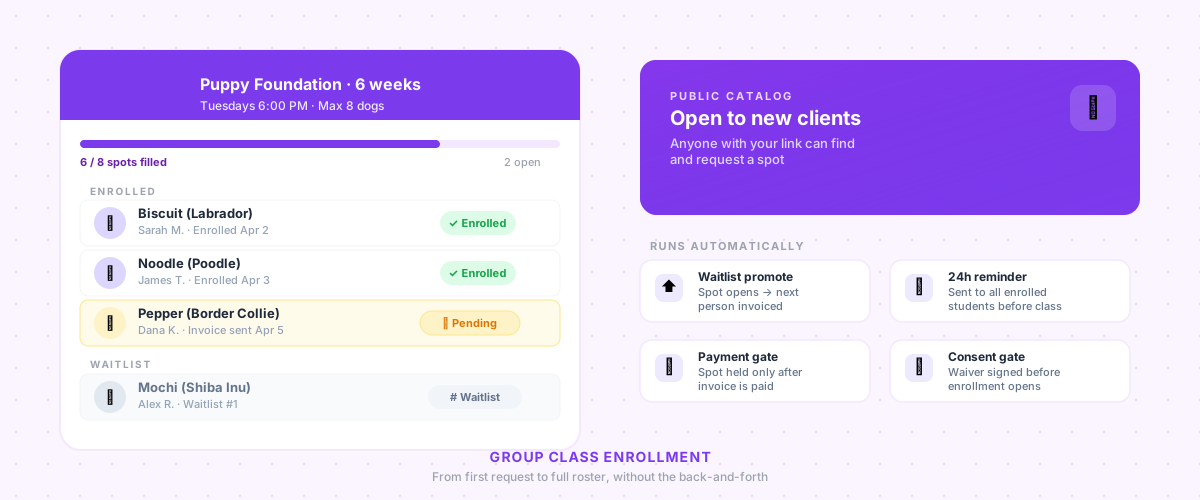
Group classes are one of the better business models in dog training. You teach the same skills to six dogs at once, build community among clients, and create a predictable schedule. They are good for dogs, good for owners, and good for revenue.
The part that tends to fall apart is the admin. Enrollment is handled through Instagram DMs. The waitlist is a notes app or a piece of paper. Invoices go out manually, and half the class does not pay until the night before. Someone drops out at the last minute and the spot goes empty because there was no system to fill it.
None of this is a character flaw. It is just what happens when a class management process outgrows the informal tools it started with. Here is what a more structured approach looks like.
Set a real capacity limit and stick to it
The most common enrollment problem is over-promising. Someone messages asking if there is room, you say yes because you are not sure of the exact count, and you end up with more dogs than you wanted in the class.
A fixed capacity limit solves this. Decide how many dogs the class can take, and make that the number. When it fills, it is full. Anyone who asks after that point goes on the waitlist.
This sounds obvious, but it requires having a single source of truth for who is enrolled. If enrollment is tracked across texts, DMs, and a spreadsheet that may or may not be current, the capacity limit does not work in practice because you cannot trust the count.
Hold spots with payment, not with intention
The gap between "I want to sign up" and "I have actually signed up" is wider than it seems. A lot of trainers take verbal commitments or informal reservations, then send an invoice a few days before the class starts. By then, some of those people have changed their minds or found something else. The class starts undersized.
The cleaner approach is a payment gate: a spot is not confirmed until the invoice is paid. This creates a real commitment point. It also removes the awkward dynamic where you are chasing someone down for payment the week of the class.
For clients who are genuinely interested but not ready to commit immediately, the waitlist is the right place for them. They are not losing anything by being there, and it keeps the roster accurate.
Run the waitlist actively, not passively
Most waitlists are passive: someone signs up, waits, and maybe hears from you eventually. An active waitlist works differently. When a confirmed spot opens up, the next person on the list gets notified and a set window to pay. If they do not pay within that window, the spot moves to the next person automatically.
This matters because the value of a waitlist is filling empty spots quickly. A passive waitlist that relies on you manually reaching out when something opens creates delays, and delays mean the spot might sit empty.
An active, automated waitlist also lets you be honest with people about where they stand. "You are third on the waitlist" is more useful than "we will let you know." Clients who know their position can make an informed decision about whether to wait or look elsewhere.
Consent before enrollment
Group classes have specific liability considerations. Dogs you have not worked with before, owners with varying experience levels, other dogs in close proximity. A signed waiver or consent form before the first class is standard practice for a reason.
The problem is that collecting signatures manually adds friction at exactly the moment you want clients to commit. A consent gate that is built into the enrollment flow solves this: the client signs before they can pay, which means by the time they are on your roster, the paperwork is done.
It also means you are not chasing signatures the morning of the class from three people who did not see the email you sent last week.
Reminders reduce no-shows
Group class no-shows are more disruptive than individual session no-shows. When one client does not show up to a private lesson, you lose that session. When someone does not show to a group class, the whole group is affected, and the dynamic of the class changes.
Automated reminders 24 hours before each class reduce this substantially. Most no-shows are not intentional. People forget, especially for a recurring class they have been attending for a few weeks and have started to take for granted. A reminder the night before is usually all it takes.
If you are running cohorts on a regular schedule, your existing client base is your best source of new students. An email to all active clients when a new cohort opens fills spots faster than social media posts, and the clients who come through that channel are already relationships. Build the announcement into your enrollment process, not as an afterthought.
Different class types need different structures
A six-week course, a one-off workshop, and a drop-in class each have different enrollment needs. A course requires clients to commit to the whole series upfront, which means a single invoice for the program. A drop-in class is pay-per-session, which means you need a way for clients to pick which specific sessions they are attending and pay for those. A workshop is somewhere in between.
Using the same enrollment process for all three creates friction. A drop-in client being asked to pay for a full series is going to push back. A course client being given per-session pricing is going to get confused about whether they are locked in or not. The enrollment structure should match the class type.
Make classes discoverable to new clients
Group classes are also a way to bring in clients who have not worked with you before. A public listing with your class schedule, pricing, and a way to request a spot reaches people who are looking for exactly what you offer but have not found you yet. They do not need to be an existing client to express interest. They request a spot, you review it, and if it is a fit, you send an invoice.
The key word is "request." A public listing does not mean an open door. It means a structured intake point that you control. The difference between a waitlist and a request queue matters here: a request from a new client is an opportunity to have a brief conversation before committing a spot, not an automatic reservation.
The admin side is part of the experience
How clients enroll, how they pay, and how they receive reminders and information before the class starts is part of the impression your business makes. A smooth, professional enrollment process signals that the class itself will be organized. A chaotic enrollment process, with invoices sent at the last minute and reminders that never arrive, signals the opposite.
Getting the enrollment side right is not just about saving yourself time. It is about delivering a consistent experience from the first point of contact, not just from the first class.