What to Include in a Board and Train Intake Form
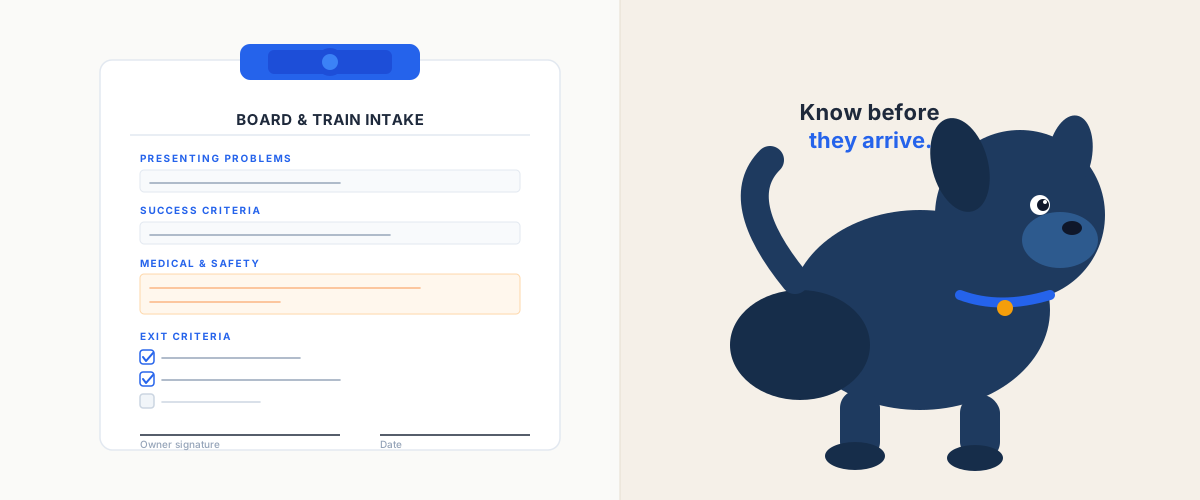
Most board and train intake forms ask for the basics: the dog's name, age, breed, vaccination records, emergency contact. That is a start, but it is not really an intake. It is a registration form.
A proper intake gives you what you actually need to run the program well: what the owner wants, what the dog is capable of, what the constraints are, and what success looks like when the dog goes home. Getting those details before the dog arrives saves a lot of back-and-forth, and it sets expectations in writing so everyone is aligned from the start.
Here is what a thorough board and train intake should cover, and why each section matters.
Presenting problems and goals
Ask the owner to describe the specific behaviors they want addressed, not just "better manners" or "needs training." The more specific their answer, the better you can calibrate the program and the more clearly you can show progress at the end.
Alongside this, ask what success looks like to them. What does the dog need to be able to do reliably when they go home? This is different from your professional assessment of what is achievable. Getting both written down early helps when expectations and outcomes do not fully match.
Baseline behavior
Before you work with a dog, you need to know where they are starting. Ask the owner to describe the dog's current behavior across the relevant areas: how the dog behaves on leash, off leash, around people, around other dogs, around food, in the home. Ask about known triggers and how the dog responds to them.
This gives you a reference point. It also helps you spot gaps between what the owner reports and what you observe, which is useful information in itself.
Medical and safety information
This section is non-negotiable. You need to know about any health conditions, medications, dietary restrictions, allergies, or physical limitations before the dog arrives. You also need to know the dog's bite history, if there is one, and any specific handling notes.
Some trainers separate this into a medical section and a safety section. Either way, the questions need to be explicit. "Is there anything we should know about your dog's health?" will get you a lot less than a structured list of specific questions.
Home environment
Understanding where the dog lives shapes what you train and how you train it. A dog going home to an apartment with no yard needs different things than one going back to a farm. A home with young children, other dogs, or cats changes what transfer looks like. Ask about the physical environment, the daily routine, and who else the dog interacts with.
This also matters for setting realistic expectations. If the dog is going back to a chaotic household, the owner needs to know what maintaining the training will require on their end.
Owner capability and involvement
The dog's behavior at the end of a board and train is only as durable as the owner's ability to maintain it. Ask honestly about the owner's experience level, how much time they can realistically put into reinforcement, and whether they have worked with a trainer before.
Some owners are experienced and committed. Others are hoping the dog comes home fixed and stays that way with minimal effort on their part. Knowing which you are dealing with changes how you structure the transfer session and what ongoing support looks like.
Scope and non-negotiables
Be explicit about what the program will and will not cover. If there are behaviors outside scope for this stay, say so. If there are methods you do not use or constraints the owner has placed on the training, those need to be in writing too. That is the kind of thing you want documented before it becomes a dispute.
Transfer plan and milestones
A good intake also looks forward. How will the training be handed off to the owner? What milestones are you aiming for during the stay, and by when? What does the owner need to do in the weeks after the dog comes home to maintain the work?
Writing these out at intake, even roughly, gives you a framework to work against during the program. It also gives the owner something concrete to reference after pickup, rather than relying on memory from a transfer session that often happens when they are emotional and distracted.
One section trainers often skip is exit criteria: the specific, observable behaviors that need to be in place before the dog goes home. This protects you. If a dog is not ready at the originally planned end date, having agreed-upon exit criteria makes it much easier to explain why an extension is needed and what you are working toward.
Getting the intake signed
The intake form should be signed by the owner before the dog arrives, not at drop-off. Drop-off is busy and emotional. Owners do not read carefully when they are managing a dog who is excited or anxious and trying to hand over a bag of food and a favorite toy.
Send the form in advance. Give them time to read it properly, ask questions, and fill it out honestly. You get better information, and you avoid the situation where an owner claims they did not understand what they were agreeing to.
Day-by-day: keeping the owner informed
The intake is the start of a longer communication loop. During the program, daily logs, notes, and media help the owner see the work in progress. It builds trust, reduces anxiety about where their dog is and what is happening, and makes the transfer session more productive because the owner has been following along the whole time.
The more an owner understands about what was worked on and why, the better they can maintain it at home. The daily log is part of the training, not just a courtesy.
The feeding, medication, and belongings details you collect here also drive the day-to-day operation once the dog arrives. For more on running that side of things, see kennel management without a whiteboard.