Dog Behavior Assessments: Is He Actually Getting Better?
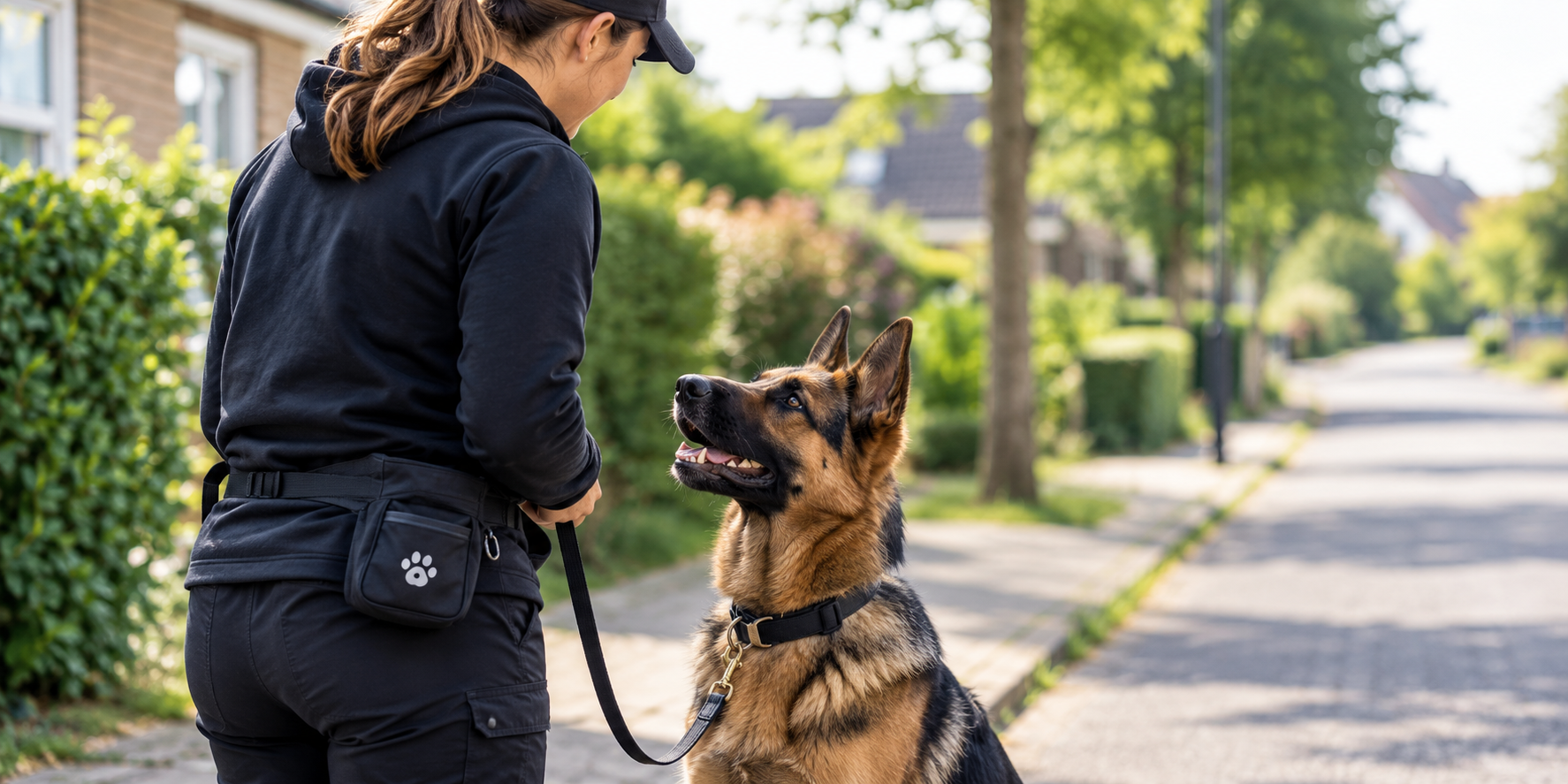
Week seven with a two year old German shepherd who loses his mind at other dogs on the lead. You are packing up on the pavement outside the house when the owner asks, quite reasonably, whether he is actually getting better. Her partner thinks they are wasting their money. She would like something to say to him tonight.
You think he is better. You are fairly sure he is better. Three weeks ago he was going over threshold at forty metres and today he held it together at fifteen, for a while. But that is a feeling built from seven Saturday mornings, and what you actually say is "he's coming along really well," which is true, and which is not going to win the argument in their kitchen.
The evidence exists. It is in your session notes, all seven of them, written in the car afterwards. Nobody, including you, is going to sit down and read them back in order before Saturday.
"Is it working?" is the question behind every renewal
Owners almost never ask about technique. They ask whether it is working, and they start asking somewhere around week five or six, which is roughly when the novelty has worn off, the invoices have added up, and the dog has had one bad day in front of a neighbour.
How you answer that question decides a lot. A client who can see the progress buys the next package. A client who cannot quietly concludes that the dog was always going to be like this, and stops booking. Neither of them tells you which way they went until it has already happened.
"He's coming along" is a fine thing to say in passing. It is not an answer. An answer names what was hard in week one, what is easier now, what still is not, and what you are working on next.
Your notes already know the answer
If you write decent session notes, the progress story is already in them. Session two: reacted at the corner, needed five minutes to come down. Session four: noticed the dog across the road, looked back at the owner without prompting. Session six: one bad moment when a spaniel came out of a gate, recovered in under a minute.
Read in a row, that is a clear trajectory. Read one at a time, a week apart, it is just a series of Saturdays. The pattern only shows up when someone lines the notes up side by side, and that someone is always you, at night, after a full day of other people's dogs.
So it does not happen. Not because trainers do not care about progress, but because a written review of every dog every few weeks is an extra job, and it is the first job to go when the week fills up.
What a useful progress summary actually says
A good summary of where a dog is answers four things in plain language. What has improved, with a specific session it showed up in. What has slipped or stalled. What you are focused on right now. And nothing it cannot back up from the record.
That last point matters more than it sounds. A summary that says the dog is "making excellent progress across all areas" is worthless, because it would say that about any dog. A summary that says recall is reliable in the garden but not yet in the park, and that the jumping at the door came back after the family's week away, is something an owner can recognise, and something a second trainer can act on.
It should also be short. Two or three hundred words is enough to describe where a dog is. Anything longer stops being a summary and becomes another set of notes to read.
The progress story is already in your notes. What is missing is the twenty minutes it takes to read them all in a row.
Where AI genuinely helps, and where it should not
Reading ten sets of notes and writing a few honest paragraphs about the pattern is exactly the kind of job software can now do well. It is not judgement. It is collation, done carefully, every time, without getting tired on a Thursday.
In HeelYeah, every animal has an assessment that is built from its record: the notes from its most recent completed sessions, the behavior tags on its profile, and the notes your staff wrote on its day care and day training days. When you save post-session notes, the assessment is rewritten a little while later with the new session included, and there is a button to regenerate it on demand. It is told to talk about improvements, regressions and current focus, to point to specific sessions, and not to speculate beyond what the notes say.
What it should not do is decide anything. It does not diagnose a dog, set a training plan, or go out to a client on its own. The assessment is staff-only by default, and it is shared with the owner only when a trainer turns sharing on for that animal. You read it first. If the notes it was built from were thin, it will be thin too, and that is a signal about the notes, not a failure of the summary.
Regressions belong in the summary too
The temptation, when you are writing a progress update by hand for a paying client, is to lead with the good news and soften the rest. That is understandable, and it causes real problems later.
A dog that has started guarding the sofa again after a house move is a dog the owner needs to hear about honestly, and early. An owner who only ever got good news is blindsided when the trouble comes back, and tends to conclude the training failed rather than that dogs have bad months. A summary that names the slip next to the gains, in a flat, factual tone, gives you a much better conversation than either silence or a surprise.
It also keeps you honest with yourself. It is easy to feel that a dog is improving because you like the family and the sessions are pleasant. A summary that keeps mentioning the same stalled problem is a useful nudge to change the plan.
The person who needs it most is not the owner
The owner benefits, but the reader who gets the most out of an up to date assessment is whoever else handles the dog. The trainer covering your Saturday. The new hire taking over a client list. The staff member checking a dog into board and train who has never met it.
Without a summary, they have two options: read every session from the start, or walk in cold. Most walk in cold. With one, they spend two minutes at the top of the animal's record and arrive knowing that the shepherd is fine at fifteen metres, is not fine with spaniels, and is currently working on a look-back at the corner of the road.
That is the same reason the client record matters at all. A training business whose knowledge lives in the head of one person can only grow as far as that person can stretch.
From a trainer using HeelYeah
“HeelYeah has made it so much easier to keep every part of my dog training business organized in one place. From client and pet information to paperwork, scheduling, and payments, everything is easy to find and manage.”
Start with the notes, not the summary
No summary is better than the record underneath it. If your post-session notes say "good session, worked on loose lead," that is what any assessment will have to work with, whether a person writes it or software does.
So the habit worth building is not reviewing every dog every month. It is writing three or four specific sentences after each session: what the dog did, at what distance or duration, what changed since last time, and what is next. Tag the dog with the behaviors you are working on. Do that consistently and the review takes care of itself.
Then, the next time an owner asks on the pavement whether it is working, you do not have to reach for "he's coming along." You can open the dog's record, read it with them, and send it home for the kitchen table.